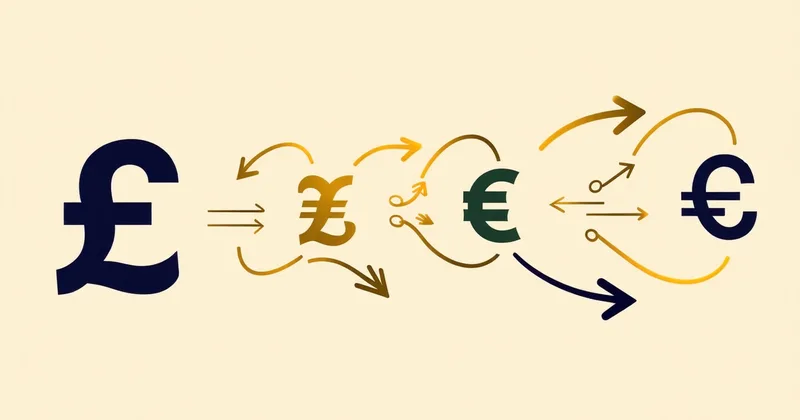
For many first-generation UK professionals, financial life has two axes: building something here, and supporting family back home. These are not competing obligations — they are both expressions of the same values. But in financial terms, they do compete for the same capital, and the trade-offs are real. This article looks at what the data and the maths say, and what a halal ISA changes in that calculation.
The size of the remittance
The UK is one of the world's largest sources of international remittance flows. The World Bank and KNOMAD data consistently show that UK-resident workers sent tens of billions of pounds to sub-Saharan Africa, South Asia, and the Middle East and North Africa region in recent years. For individual Nigerian, Pakistani, Bangladeshi, and Egyptian diaspora professionals in the UK, personal remittance flows — regular transfers to parents, siblings, and home-country dependants — often represent 10–30% of take-home income.
This is not discretionary. It is a family obligation, sometimes with an explicit religious dimension (maintaining family ties, or silat ar-rahm in Islamic tradition, is an obligation). The question Wealth8 is designed to help answer is not whether to remit — that decision is not ours — but whether the non-remitted portion of income is being deployed as effectively as possible within UK financial structures.
What halal UK investing offers that remittance does not
Remittance provides immediate benefit to family members back home. It does not build compound wealth for the sender. Money sent to Lagos in 2015 was useful in 2015; it was not earning tax-free returns inside an ISA wrapper for ten years. The ISA offers a specific structural advantage that remittance cannot replicate: a compound return shelter from UK Capital Gains Tax and Dividend Tax, with FSCS protection.
For a UK professional earning £80,000 and remitting £15,000 per year, investing the remaining available capital — say £8,000–£10,000 per year — into a Sharia-screened ISA over 15–20 years builds a material tax-free asset. That asset may eventually fund a property deposit in the UK, children's education, or retirement — here or back home.
The retirement calculation
Retirement planning for diaspora professionals is genuinely more complex than for UK-born peers. The question is not simply "how much do I need at 65?" but "where will I be at 65, and what does that life cost?" Retirement in Lagos, Karachi, Dhaka or Cairo is materially cheaper than in London — but requires a different asset base, potentially in a different currency, with different tax treatment.
A Wealth8 ISA grows tax-free within the UK. On withdrawal, proceeds from Wealth8's platform can be converted to Nigerian Naira, Pakistani Rupee, Egyptian Pound, or Bangladeshi Taka at a transparent 0.30% FX spread. Whether you retire here or there, the ISA accumulation phase is the same; the destination of proceeds is flexible.
For those with UK-based pension entitlements — NHS pension, employer-matched workplace pension — the calculation is more complex still. The interaction between a UK SIPP, state pension entitlements, and home-country assets is a matter for a qualified cross-border IFA. Wealth8 provides the halal investment vehicle; we do not provide the holistic retirement plan.
Multi-currency wealth: the practical reality
Many UK diaspora professionals hold significant assets in more than one currency: sterling savings and pension in the UK; naira, rupees, or pounds (Egyptian) in a home-country property or bank account. This multi-currency position creates a natural hedge in some respects — sterling weakness benefits home-country property values when measured in GBP — but it also creates complexity in financial planning.
Wealth8 does not pretend to solve that complexity. What it offers is a clean, regulated, Sharia-screened sterling investment vehicle with the ability to convert proceeds to home currencies on withdrawal. That is one piece of a multi-currency financial picture, not the whole picture.
Practical approaches
Several approaches are commonly discussed among UK diaspora professionals who are thinking deliberately about this trade-off:
- Floor the remittance, invest the remainder. Decide the non-negotiable monthly remittance amount. Any income above that floor — after living costs — goes into the ISA. This provides predictability for family and preserves the compound growth opportunity.
- Use the ISA as a medium-term vehicle, not a retirement vehicle. For diaspora professionals who may return to their home country within 10–15 years, the ISA is useful as a medium-term accumulation vehicle. When they leave the UK, the ISA remains (no new contributions, but continued growth); on return they can resume contributions.
- Separate remittance from emergency fund from investment. Many diaspora professionals do not have a formal emergency fund in the UK — their family network serves that function back home. Building a modest UK sterling emergency fund before maximising ISA contributions is generally sensible financial hygiene.
This article is for informational purposes only and does not constitute personal financial or investment advice. Capital at risk. Tax treatment depends on individual circumstances. Cross-border tax and pension implications require specialist advice from an FCA-authorised adviser.